Jesus Confronts the Demonic
Jesus Confronts the Demonic: Understanding the Spiritual Battle in the Gospels
The story of Jesus' ministry is often presented as a simple travel narrative, but beneath the surface lies a profound spiritual battle that many Christians miss. When we examine the context and geography of Jesus' ministry, we discover a deliberate confrontation with demonic powers that changes how we understand the Gospel accounts.
Why Did Jesus Go to the Wilderness?
After Jesus' baptism, the Spirit immediately drove him into the wilderness of Judea. This wasn't random - it was strategic. In Jewish understanding, the wilderness was where demons lived. The Old Testament references to "night owls" were actually references to Lilith, a prominent feminine demon, and "goats" were actually goat demons.
The wilderness was also where the scapegoat was driven to Azazel, a demon, and pushed off a cliff. This was unholy ground, the domain of demonic powers.
Jesus as the True Israel
Jesus' temptation in the wilderness mirrors Israel's experience in the desert, but with a crucial difference - Jesus succeeded where Israel failed. Every answer Jesus gave to Satan's temptations came from Deuteronomy, the book that records Israel's wilderness wanderings.
When Satan tempted Jesus to turn stones to bread, Jesus quoted about not living by bread alone but by every word from God's mouth - the same lesson Israel was supposed to learn when God provided manna. When Satan dared Jesus to jump from the temple, Jesus referenced the testing at Massah where Israel tested God.
The Ultimate Temptation
Satan's final temptation was offering Jesus all the kingdoms of the world. Notice what Jesus didn't say - he didn't claim Satan couldn't deliver on this promise. Satan was offering the nations that had been disinherited by God at Babel, and as "the ruler of this world," he had authority over them.
Jesus' refusal wasn't because the offer was empty, but because God would reclaim the nations by His own means, in His own time, without bargaining with the enemy.
The Ministry of Exorcism Begins
After his wilderness victory, Jesus began his ministry with a clear declaration: "Repent, for the kingdom of heaven is near." His first recorded miracle was casting a demon out of a man in a synagogue - the first exorcism recorded in Scripture.
This marked the beginning of the re-establishment of God's kingdom on earth. As Jesus said, "If it is by the finger of God that I cast out demons, then the kingdom of God has come upon you."
The Significance of the Twelve and the Seventy-Two
Jesus chose twelve disciples, representing the twelve tribes of Israel. But then he sent out seventy-two others - a number that corresponds exactly to the nations listed in Genesis 10 that were dispossessed at Babel.
When these disciples returned, they were amazed: "Lord, even the demons are subject to us in your name!" Jesus responded, "I saw Satan fall like lightning from heaven."
Ground Zero: Caesarea Philippi
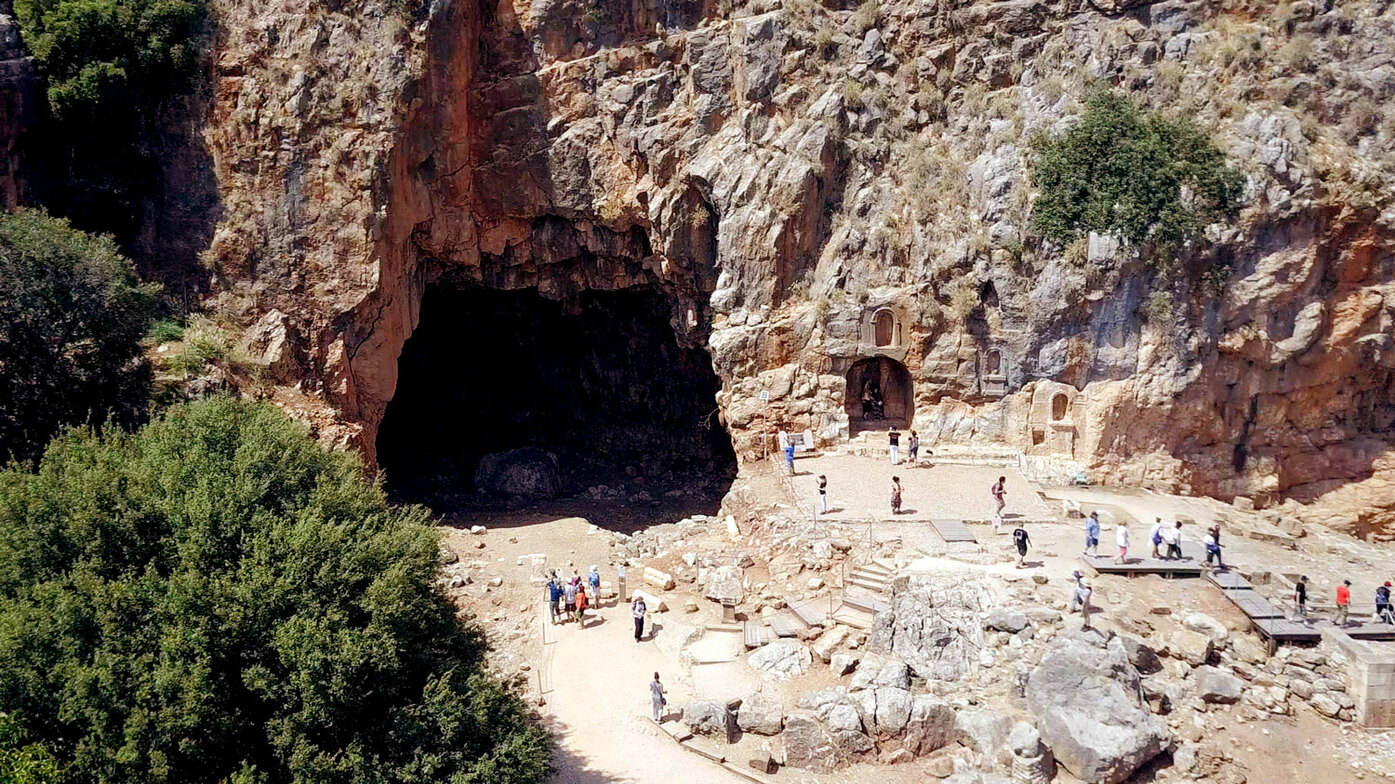
The most dramatic confrontation occurred at Caesarea Philippi, at the foot of Mount Hermon. This location was known as the "gates of hell" - a place with over twenty temples dedicated to various gods, including Pan and Zeus.
Here, Jesus asked his disciples, "Who do you say that I am?" When Peter declared, "You are the Christ, the Son of the living God," Jesus responded with his famous statement about building his church and the gates of hell not prevailing against it.
Understanding "Gates of Hell"
Many misunderstand this passage. Gates don't march - they defend. Jesus wasn't promising that his church would merely survive attacks; he was declaring that his church would be on the offensive, storming the very strongholds of evil.
The Transfiguration: Victory Declaration
Following Peter's confession at the base of Mount Hermon, Jesus took Peter, James, and John up the mountain where he was transfigured. Jewish tradition held that Mount Hermon was where the fallen angels of Genesis 6 had descended to earth.
By revealing his divine glory at this very location, Jesus was making a declaration to all hostile spiritual powers: "I've come to earth to take back what is mine. The kingdom of God is at hand."
The Reality of Spiritual Warfare Today
This understanding of Jesus' ministry has profound implications for Christians today. We live in a world that is no longer culturally Christian, and spiritual warfare is a reality we must be prepared to face.
The early church understood this. They regularly dealt with demonic manifestations and saw exorcism as a normal part of ministry. Yet many modern churches avoid this topic entirely, leaving believers unprepared for spiritual battles.
Life Application
This week, recognize that your faith exists in the context of a real spiritual battle. Jesus didn't come just to save souls - he came to defeat the powers of darkness and reclaim what belongs to God. As his followers, we're called to continue this mission.
Consider these questions:
- Do I take spiritual warfare seriously, or do I dismiss it as outdated thinking?
- Am I prepared to stand against evil in my community and workplace?
- How can I better equip myself to recognize and resist demonic influence?
- What areas of my life or community need to be reclaimed for God's kingdom?
The same Jesus who confronted Satan in the wilderness and declared victory at the gates of hell is with you today. Don't settle for a "gentle Jesus, meek and mild" when facing the forces of darkness. You serve the one who makes demons tremble and who has already secured the ultimate victory.